By Agrima Goyal | Date: 02-12-2025
I spent eight years as a full-time freelancer as a lone editor-creator whose schedule answered only to inspiration and whatever snack I was eating that day. It looked like absolute freedom, at least on Instagram. But slowly, that freedom started to go blunt. Without boundaries, my days blurred into one long, badly edited montage. Work happened whenever it felt like it, and rest happened only when my brain staged a protest. I wasn’t unhappy; just marinating in the same creative soup for far too long.
My work was solid, but not exactly evolving. My ideas showed up, did their job, and went home early. Creativity needs movement and pressure, and I had kindly removed both from my life. So, in a plot twist even I didn’t see coming, I took my first in-house job in almost a decade: essentially trading “ultimate freedom” for a desk, a schedule, and something shocking: momentum.
Taking a full-time job after nearly ten years felt a bit like adopting a routine-shaped pet I wasn’t sure I could keep alive. I was convinced a schedule would squash me flat, like a creative pancake. But instead, it gave my days a rhythm I hadn’t heard in years. Once work had its own designated corner of my life, everything else suddenly had space to exist again. And the more I honoured those boundaries, the more energy I had to actually think and make things on purpose instead of by accident.
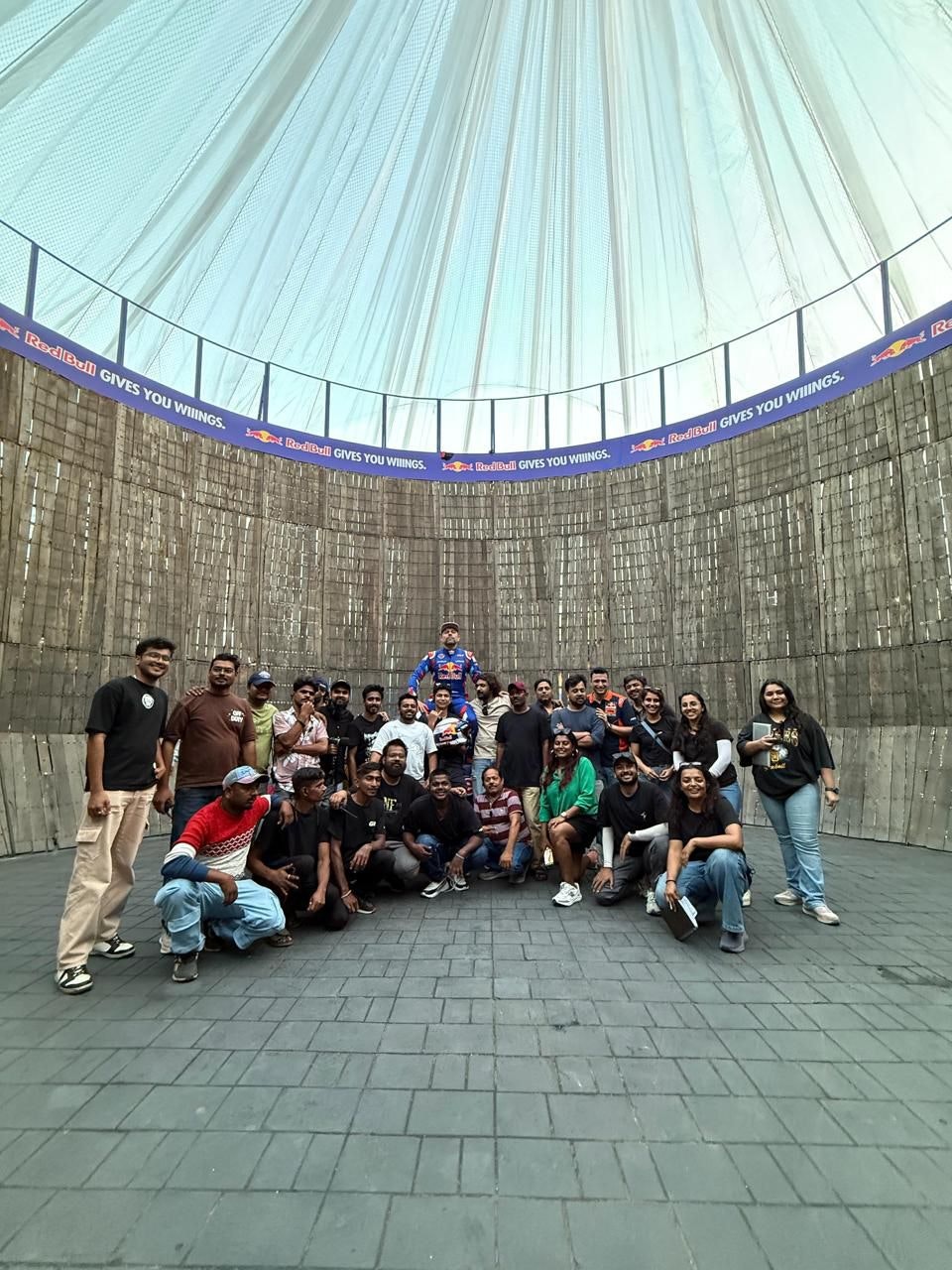
Joining an in-house team brought something even stranger: momentum. Ideas didn’t just wander around alone in my brain anymore; they met other people’s ideas, shook hands, and occasionally argued in productive ways. Conversations nudged projects in new directions. Feedback made decisions less like guesswork and more like progress. And the systems I once thought would suffocate creativity actually held it steady, like a seatbelt for my imagination. When the basics stopped wobbling, the bigger, bolder ideas finally had room to breathe.
Another surprise was discovering how creative work is measured here at Frizzon. As a freelancer, time was basically my currency; every hour had to be justified, tracked, and occasionally invented. But in a structured setup, no one cares how long you stared at the wall. What matters is whether the work actually does something useful. The shift from counting hours to creating impact felt strangely liberating. It pushed me to think rather than perform productivity, and it made it clear that trust is the real engine of creative work and not a spreadsheet of how long my cursor hovered over a timeline.
One thing I started noticing was how differently creative work gets measured. Managers love their KPIs and hour logs, but creativity doesn’t really care about Excel sheets. Some of the best ideas appear at 2 a.m. when you’re half-asleep, half-caffeinated, and fully questioning your life choices. Try putting that on a timesheet.
So the real shift is moving from measuring effort to measuring impact. Not “How long did you stare at the screen?” but “Did the work actually do its job?” But this only works if there’s trust; and trust, as it turns out, is a rare mineral mined in very small quantities by most managers. Creative work is naturally non-linear, and the harder you try to box it in, the faster it faints dramatically like it’s in a Victorian novel.
What helped me most was changing how I saw creativity itself. I used to treat it like a personality trait, something I was supposed to embody at all times like a slightly confused magician. Then I realised creativity behaves more like a bucket; sometimes full, sometimes empty, occasionally leaking. It needs refilling through rest, curiosity, practice, and the simple discipline of showing up regularly. Once I stopped trying to “be creative” and instead focused on keeping the bucket topped up, everything got easier.
My eight-year freelance detour taught me that discipline isn’t the enemy of creativity; it’s what keeps the whole thing upright. Structure, habits, rhythm aren’t traits that cage your imagination; they give it something solid to launch from. That’s how we work at Frizzon: we welcome the chaos, then give it a spine so it can actually stand up and do something useful. If you want work built with intention rather than impulse, we should talk.
And honestly, it all starts with one question: what small habit could you start this week to quietly refill your own creative bucket?